Filed under: #Blog#Design
Stone Texture in Interior Design: Luxury Homes, Hotels & Commercial Spaces
Texture has always been stone’s most distinguishing and honest quality. Long before pattern became a design conversation, before colorways were curated and collections were named, texture in stone was what separated a quarried slab from something alive. It was the irreplaceable record of pressure, time, and geological circumstance, visible in every ridge, grain, and seam.…
Texture has always been stone’s most distinguishing and honest quality. Long before pattern became a design conversation, before colorways were curated and collections were named, texture in stone was what separated a quarried slab from something alive. It was the irreplaceable record of pressure, time, and geological circumstance, visible in every ridge, grain, and seam. Designers have always known this. What’s changed is the precision with which stone can now deliver it.
The last decade of surface design has moved intentionally toward tactility. After years dominated by polished marble (flawless, reflective, and beautiful but increasingly predictable), a different sensibility has taken hold in hospitality, residential, and commercial interiors. One that asks surfaces to do more than shine. To read differently in morning light than at dinner. To give a hand something to discover. To make a room feel less composed and more lived-in.
The Turn Away From Perfection
The clientele driving today’s high-end residential market has, broadly, stopped wanting the perfect neutral sleek look that was trending a few years ago. They want layered. They want the bathroom wall that looks like it belongs to the architecture, not to a catalog. They want materials that age interestingly.
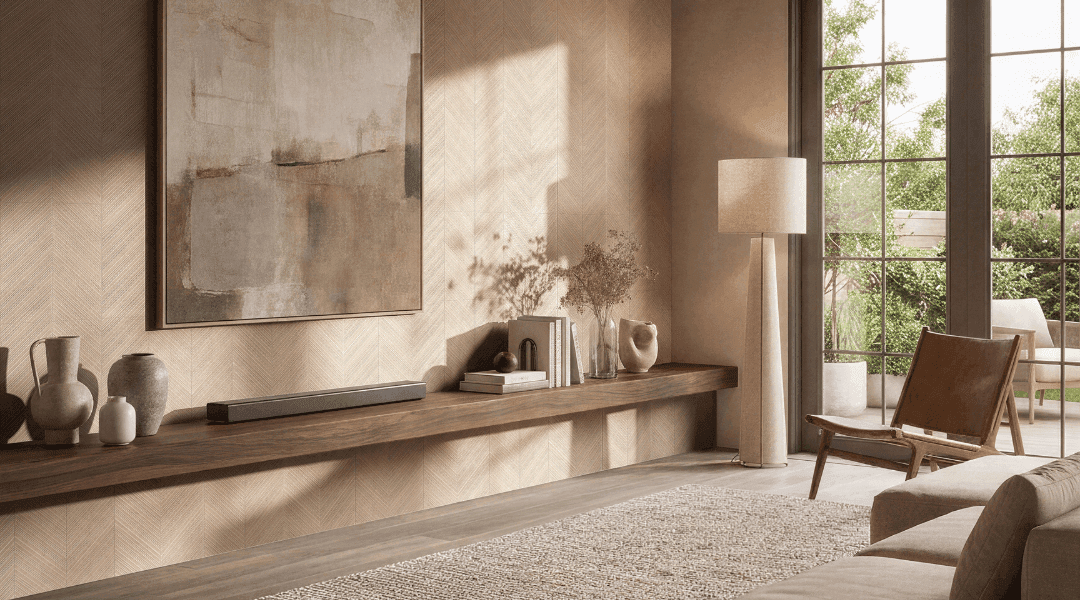
Textured stone surfaces, particularly those with subtle three-dimensional relief, achieve this without requiring distress or artificiality. A fluted or vertically striated wall panel reads as structural, almost architectural. It casts its own micro-shadows. It shifts character with the light. A hallway that might otherwise feel utilitarian becomes a considered composition.
Four stones, White Carrara, Nublado Light, Pietra Toscana, and Ombra, are available in three signature surface treatments: Tagliata, Spina Chevron, and Fiorentina. Each 9.5mm tile is cut to bring out natural veining and tonal variation, then given a surface geometry that introduces real depth. Instead of the result feeling and looking decorative, It’s dimensional.

Texture as Atmosphere
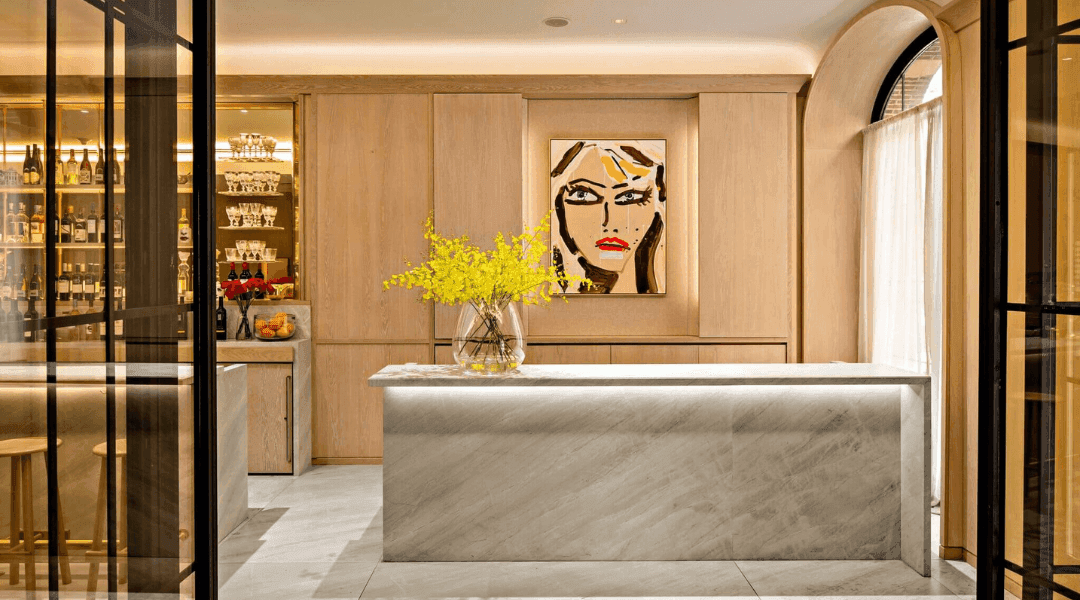
Restaurants, hotels, and resorts operate in the business of sensation. Every element of the environment is building toward an experience that can’t be fully named but is immediately felt. Stone has long played a role here, but typically as flooring or countertop, carrying weight and durability. The more interesting hospitality applications have moved stone to the vertical plane.
A restaurant with a textured stone feature wall doesn’t need artwork. A resort lobby finished in Ombra communicates something without a single word of branding. In other words, let the surface do the talking.
What makes textured stone particularly well-suited to commercial environments is its ability to read differently at scale. A pattern that seems subtle on a sample board becomes completely immersive across twelve linear feet of wall. Spina Chevron has a directionality that guides the eye and gives long corridors a sense of intention. In a boutique hotel, that makes a real difference.

What 9.5mm Actually Means
The specificity of a 9.5mm tile is worth pausing on. Stone at this thickness occupies a different design register than large-format slabs or thin veneers. It has enough mass to be taken seriously, enough precision to be used with restraint. On a feature wall, the joints become part of the pattern. In Fiorentina, a horizontal staggered layout, those joints reinforce the layered, almost geological quality of the surface. You’re not looking at tile. You’re looking at stratification.
This is what separates surface design that designers specify again from surface design they try once. The material has enough going on that you can keep discovering it. It works behind a candle, under a skylight, or beside a concrete column.

The Larger Shift
What the Pietra Viva collection represents isn’t simply a new product. It’s a response to a design culture that has rediscovered what stone has always been: a record of time and pressure, made beautiful by the specific character that no other material can replicate. In a moment when interiors everywhere are reaching for personality, authenticity, and dimension, the answer has been in the quarry all along.