Filed under: #Blog#Design
Quartzite: Nature’s Fusion of Strength and Style
When it comes to natural stone, few materials balance raw beauty and natural strength quite like quartzite. Born deep within the earth and refined by time, quartzite bridges the gap between luxury and longevity, making it a perfect fit for both residential sanctuaries and high-performance commercial spaces. The Origins of Quartzite This stone begins as…
When it comes to natural stone, few materials balance raw beauty and natural strength quite like quartzite. Born deep within the earth and refined by time, quartzite bridges the gap between luxury and longevity, making it a perfect fit for both residential sanctuaries and high-performance commercial spaces.
The Origins of Quartzite
This stone begins as sandstone, a sedimentary rock composed primarily of quartz grains. It then undergoes a dramatic transformation through heat and pressure deep within the Earth’s crust. This process, known as metamorphism, fuses the grains together into a dense, crystalline structure, creating a stone that is harder than granite yet visually reminiscent of marble.
Its veining and soft color variations are often mistaken for marble, but quartzite’s durability and resistance to scratching and etching set it apart. It’s this rare combination of resistance and elevated design that has made quartzite a favorite among architects, designers, and homeowners looking for a refined yet practical material.
A Palette Shaped by Nature
Each slab of quartzite tells its own story. Depending on the region where it’s quarried, quartzite can take on subtle hues of white, gray, beige, pink, or even deep green. Brazilian quarries, for example, are known for producing varieties like Taj Mahal, Cristallo, and Macaubas, prized for their recognizable veining and tone-on-tone movement. Other varieties may feature bold linear striations or dramatic color contrasts that bring a sort of sculptural interest to any space.

Taj Mahal Quartzite.
Because quartzite is a natural product, no two slabs are ever identical. This uniqueness appeals to designers who value authenticity and individuality, which are both qualities that create one-of-a-kind modern interiors and architectural projects.
Applications in Design
The versatility of quartzite makes it an exceptional material across a wide range of applications. Its dense composition makes it suitable for both interior and exterior use, withstanding high-traffic environments while retaining its visual appeal.
Residential Design with Quartzite

A kitchen island in Cristallo Quartzite from designers Workshop ADP. Photography by Read McKendree.
In residential settings, quartzite is often used for:
- Kitchen countertops and islands – combining the look of marble with the durability needed for everyday use.
- Bathroom vanities and walls – where resistance to moisture and heat is key.
- Fireplace surrounds and feature walls – where its organic veining can become a focal point of the room.
- Flooring and staircases – adding texture and luxury to transitional spaces.
Commercial Design with Quartzite
In commercial design, quartzite stands up to the demands of hospitality, retail, and corporate projects. It can be found gracing:
- Hotel lobbies, where large-format slabs make a dramatic first impression.
- Restaurant bars and tabletops, offering sophistication that endures wear and tear.
- Office reception areas, where its natural patterning conveys refinement and permanence.
- Exterior façades and cladding, leveraging its weather resistance and visual impact.
Its adaptability to different finishes (polished, honed, or leathered) allows designers to tailor the look to the atmosphere of a space, whether that’s sleek and modern or warm and textural.
Quartzite in Design
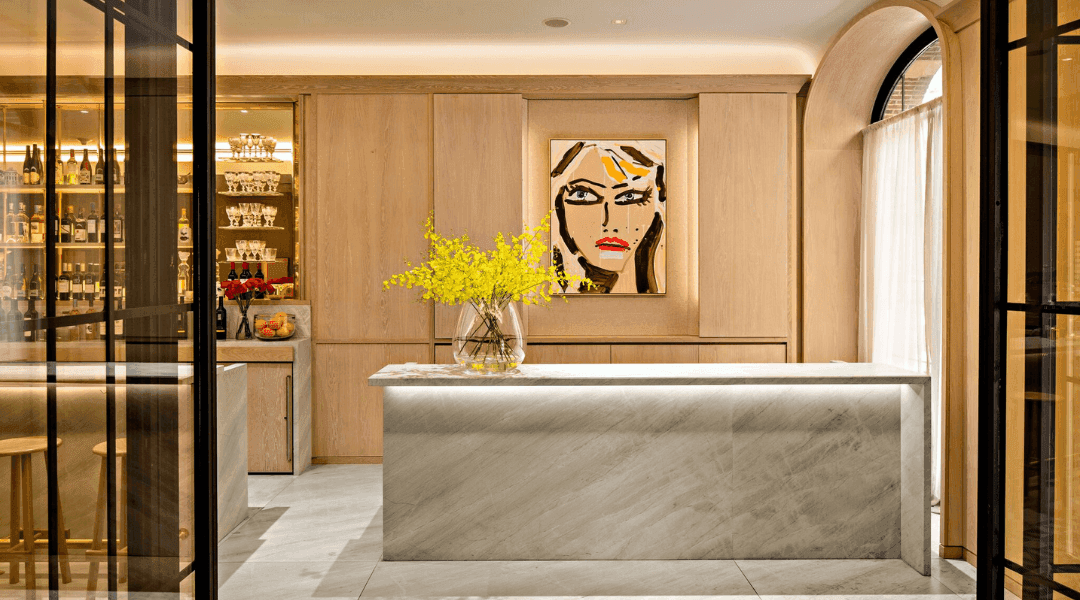
The Gem Hotel in New York City

The Gem Hotel featuring Taj Mahal Quartzite from Paris Forino Interior Design + Katherine Bernhardt. Photography by Alan Schindler.
Across the globe, quartzite has earned a place in some of the most distinguished architectural and design projects.
You can find our Taj Mahal Quartzite stone in The Gem Hotel in Chelsea. This space was designed by Paris Fornio Interior Design. Painting by Katherine Bernhardt.

The Gem Hotel featuring Taj Mahal Quartzite. Photography by Alan Schindler.
The Balance of Performance and Beauty
What truly distinguishes quartzite is its ability to meet both the functional and aesthetic demands of today’s design landscape. It withstands heat, resists scratching, and maintains its finish with minimal maintenance. Yet beyond its performance, it captures something elemental. The ancient appeal of natural stone shaped by the forces of geology and discovered by human craftsmanship.
For designers and architects, that makes quartzite more than just a material choice; it’s a design statement. It symbolizes permanence, sophistication, and a respect for nature’s artistry, all while delivering the strength to withstand the pace of modern life.

Fusion Red Quartzite detail.
Quartzite: The Takeaway
As the design world continues to seek out materials that merge luxury and individuality, quartzite has emerged as a defining stone of our era. Whether used as a bold architectural statement or a subtle, textural surface, it achieves the perfect balance between nature and design innovation.
From residential interiors to grand commercial environments, quartzite remains a celebration of both form and function: a testament to what happens when nature’s artistry meets human vision.